Social Travel App in India: How GoWeekender Works
What a social travel app does that a booking app can't, the three kinds you'll find in India, and a step-by-step look at how GoWeekender's Vibe Check, radar, tribes, escapes and expense splitting actually work, limits included.


In this guide
- 01What a social travel app does that a booking app doesn't
- 02Why "who" comes first for Indian travellers
- 03The three kinds of social travel app, and who each suits
- 04From Vibe Check to a tribe: how matching works
- 05How tribes work, and who can join
- 06Booking, chats and splitting costs
- 07How ID verification works, and what it doesn't prove
- 08What GoWeekender costs
- 09What GoWeekender doesn't do yet
- 10How to choose any social travel app: a six-point check
- 11Run trips? The host side
- 12Frequently asked questions
- 12 min to go
A social travel app helps you find the people first and the place second: who you'll travel with, then where you'll go, then the booking.
What is a social travel app?
A social travel app matches you with other travellers first, then helps the group plan, book and split the trip. GoWeekender does this in India: an eight-question Vibe Check, an opt-in radar of nearby travellers, ID-verified tribes of 2 to 10 people, group chats, an expense splitter and weekend escapes run by approved hosts. It's free on iOS and Android.
The short answer
A social travel app matches you with other travellers first, then helps the group plan, book and split the trip.
On GoWeekender you need a verified ID to create or join a tribe of 2 to 10; booking an escape on your own doesn't require it.
GoWeekender is free; as of October 2026, booking an escape adds 5% GST and a 2.42% convenience fee, shown before you pay.
Check any social travel app for who is verified and how, and where the money goes. If it fails either, use it only for chatting.
What a social travel app does that a booking app doesn't
A booking app sells you a seat, a room or a tour. A social travel app solves the step before that: who you're going with. The booking can still happen inside it, but only after there's a group.
The first question, and what you get. A booking app asks where and when, and hands you a confirmation email. A social travel app asks who, and ends with a group, a chat and a shared plan.
Who gets vetted. A booking app checks hotels and operators. A social travel app has to check people, which is much harder.
Money. A booking app charges one card. A group needs a way to track who paid for the cab, the fuel and the dinner.
When it ends. A booking app is done at checkout. A social one keeps going through the trip and after it.
Most people need both kinds at different times. If your crew already exists and only the dates are stuck, read how to plan a group trip with friends that actually happens first.
Why "who" comes first for Indian travellers
In a June 2026 YouGov survey for Airbnb, 3 in 4 Indians aged 18 to 29 agreed that who they travel with matters more than where they go. The survey covered 2,012 people across 11 Indian cities, and Airbnb published it on 1 June 2026.
The catch is that the people you'd like to travel with are rarely free on the same weekend. A social travel app widens the pool beyond your contact list to people who already want the same kind of weekend.
The three kinds of social travel app, and who each suits
Most social travel apps fall into three rough types. Pick by what you're missing: company tonight, one companion for a fixed plan, or a ready-made trip.
Hostel and meetup apps. Examples: Hostelworld's in-app chat for guests of the same hostel, and Meetup for local events. Pick these if you're already on the road and want company for dinner.
Buddy matchers. Examples: GAFFL and Travel Buddy. You post a destination and dates, then find people going the same way. Pick these if you need one companion for a fixed plan. Check the paywall first: as of October 2026, GAFFL sells a paid "GAFFL Unlimited" plan, and Travel Buddy's App Store listing shows in-app purchases from ₹99 to ₹2,999.
Group-trip marketplaces. Examples: Travello, which sells tours and activities alongside a traveller chat, and Zostel's app, which sells Zo Trips road trips for 12 to 15 travellers (both as of October 2026). Pick these if you want someone else to plan, and don't mind that the group is whoever else bought a seat.
GoWeekender mixes the second and third kinds: it matches you into small groups of 2 to 10 on travel style, budget and pace, and it also lists trips run by hosts. For the non-app routes, such as trek clubs, Reddit and friends of friends, see how to find travel companions in India.

From Vibe Check to a tribe: how matching works
In short: you answer an eight-question Vibe Check, see matching travellers near you on an opt-in radar, connect with the ones you like, and form or join a tribe of 2 to 10 for one trip. The tribe can then book a hosted escape, chat, and split costs in the app.
GoWeekender is a phone app with no web version. As of October 2026, the live app has five tabs: Vibe Check, Escapes, Home, Messages and Profile. You sign up with your phone number and a one-time code, and you have to be 18 or older.
1. Take the Vibe Check
Eight quick questions, from your ideal weekend and where you sleep to how you plan and what you do when things go wrong. Your answers become four scores: adventure, budget, social and pace.
2. Look at the radar, if you choose to
As of October 2026, the Vibe Check tab shows a radar of travellers near you with a match percentage. You start hidden. If you switch visibility on, others who have done a Vibe Check see your name, age, a few vibe words and an approximate distance inside a cell of about 5 km, never your exact spot. Ghost mode hides you and also hides everyone else from you. The nearby list can be filtered to show only women or only men.
3. Connect before you message
Tap someone on the radar to open their profile and send a connection request; they accept or decline, and anyone can switch off incoming requests in privacy settings. Direct messages only work once you're connected. You can report or block someone from their profile, a chat, a tribe, the radar or a tale (a trip story other users can read).
How tribes work, and who can join
A tribe is a small group planning one trip. You need a verified ID to create or join one, and a completed Vibe Check to create one.
4. Start or join a tribe
The creator sets the destination, dates, up to three vibes, a group size from 2 to 10, an optional age range, a budget per person and who can join: everyone, women only or men only. The app keeps at least 8 days between your tribes so you can't double-book yourself.
How women-only is checked
Only women can create a women-only tribe, and only women can join one. The app checks the gender on each person's profile, when the tribe is created and again when someone joins. You enter that gender yourself at sign-up. If you verify with Aadhaar, either by OTP or through DigiLocker, the app replaces it with the gender on your ID and you can no longer edit it in Edit profile. If you verified with PAN only, your profile gender stays self-declared and editable. So treat women-only as a strong filter, not proof.

Booking, chats and splitting costs
Escapes are trips planned and run by hosts, booked and paid for in the app. Hosts go through PAN verification when they sign up and have to be approved by GoWeekender before an escape can go live. GoWeekender doesn't run trips itself.
5. Book an escape, alone or as a tribe
You pay GoWeekender through Razorpay (UPI, cards or netbanking), never the host directly. The trip price, GST and a convenience fee are shown together before you pay (rates below), and the cancellation rules are in the booking FAQ shown on every escape page.
A tribe can book together too: on an escape page, the tribe creator taps "Book for tribe", picks who's going and the date, and each member gets a payment link in the tribe chat.
6. Use the group chat
Once you book, you're added to a group chat with the host and your co-travellers, and the host shares pickup details there. That chat closes to new messages a day after the trip's return date.
7. Split the costs that happen on the road
Each tribe has an expense tracker. Log the cab, the fuel or the dhaba bill, and the app works out balances and a settle-up plan of who pays whom. It doesn't move money: you pay each other by UPI or cash and tap "Mark paid".
8. After the trip
Rate and review the escape you went on, post a tale about it, or add the next place to your bucket list, which shows escapes and open tribes already heading there.
For example, the Jibhi and Tirthan Valley escape leaves from Delhi, and the Hampi destination page lists the current Hampi departures.

Escapes to Jibhi, Tirthan Valley, Hampi, Coorg & Wayanad
 Jibhi & Tirthan Valley (RAGHUPUR FORT)-3D/2NJibhi · 3D/2NNext departure 27 Oct 2026from ₹6,500
 Manali, Kasol & Jibhi Getaway-5D/4NManali · 5D/4NNext departure 29 Oct 2026from ₹14,000
 Banasura Hill Trek & Meenmutty Falls, WayanadWayanad · 2D/1NNext departure 30 Oct 2026from ₹5,799
 Coorg Backpacking: Mandalpatti & Abbey FallsCoorg · 2D/1NNext departure 30 Oct 2026from ₹4,599
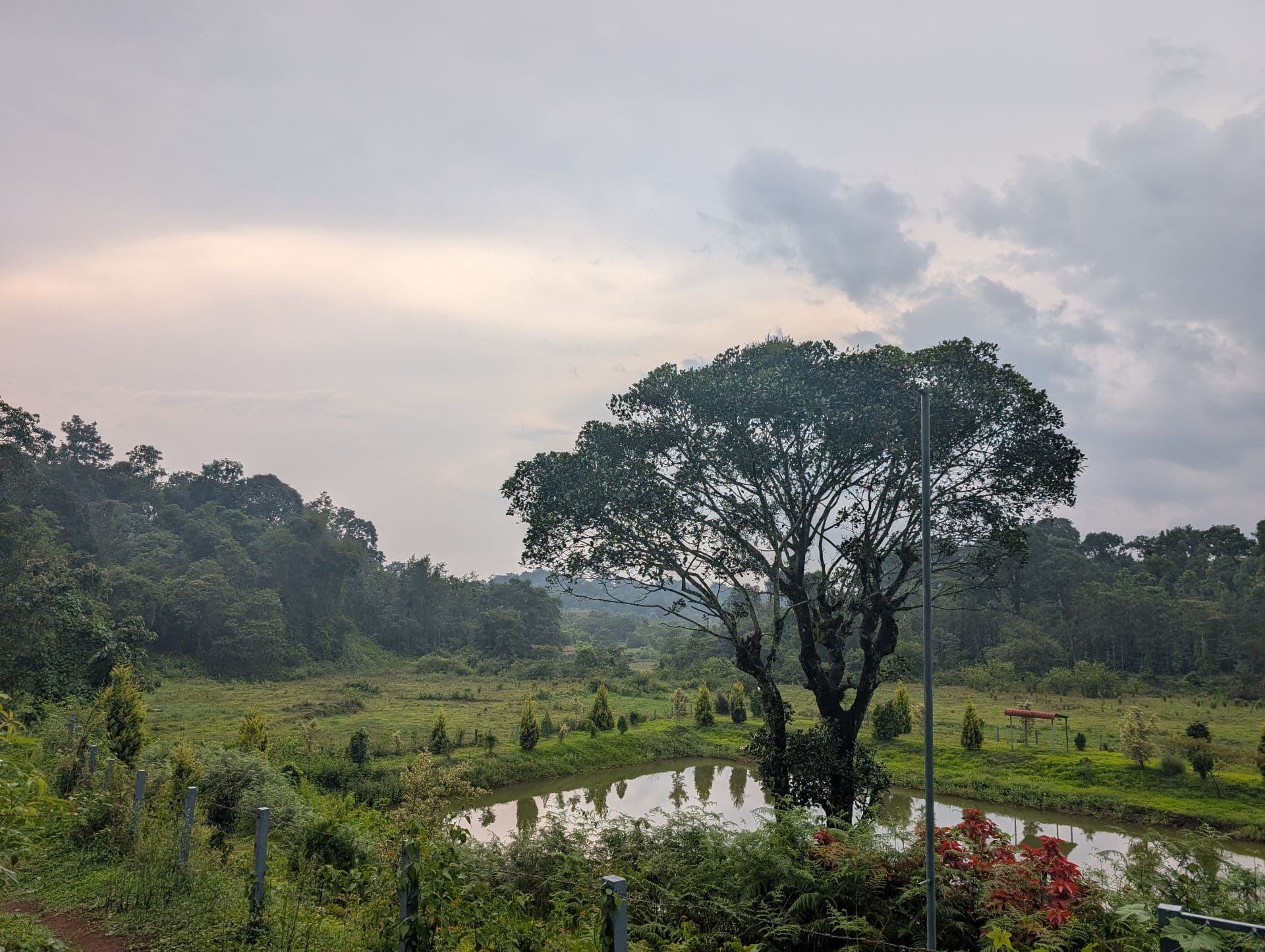 Tavoor Hills Coorg TrekCoorg · 2D/1NNext departure 30 Oct 2026from ₹4,499
How ID verification works, and what it doesn't prove
ID verification on GoWeekender confirms you are who your profile says, using an Indian government ID. It's required to create or join a tribe. It doesn't tell anyone whether you're good company.
There are three ways to verify:
DigiLocker: the government document wallet run by the Ministry of Electronics and IT under Digital India. One session verifies both Aadhaar and PAN, with no ID numbers to type.
Aadhaar: a one-time code sent to your Aadhaar-linked mobile.
PAN: checked against your PAN details.
Two honest limits. As of October 2026, booking an escape on your own doesn't require ID verification, so co-travellers who booked solo may not have done it. And a verified name says nothing about punctuality, drinking habits or how someone treats a group. Video-call your tribe before paying for anything, meet first in a public place, and share the plan with someone at home. Share your live location with someone you trust for the length of the trip. Keep your own return ticket, or the money for one, so you never depend on the group to get home. The full routine is in our guide on whether it's safe to travel with strangers in India.

What GoWeekender costs
GoWeekender is free to download on iPhone (iOS 16 or later, as of October 2026) and Android. There's no subscription, no paid tier that locks chat or filters, and no in-app currency.
As of October 2026, you pay only when you book an escape:
Trip price: set by the host, shown on the escape page.
GST: 5% of the trip price.
Convenience fee: 2.42% of the trip price including GST. It is not refunded in any case, including when the host cancels.
If the host cancels: you get the trip price plus GST back to your original payment method; the booking FAQ on each escape page says this takes 7 to 10 business days.
If you cancel: the refund depends on how close to departure you cancel; the rules are in the booking FAQ on every escape page.
Example, as of October 2026: on a ₹10,000 trip you pay ₹500 GST and a ₹254 convenience fee (2.42% of ₹10,500), so ₹10,754 in total.
Tribes you plan yourselves cost nothing to create. What you spend on the road is between the group, and the expense tracker keeps it straight.
What GoWeekender doesn't do yet
Every app has gaps. These are the ones worth knowing before you install.
No web app. It's iPhone and Android only.
The radar is only as full as your area. In a big city you'll see people; in a small town it can be empty, because it shows only those who have opted in.
Escapes are concentrated. As of 23 October 2026, most listed departures leave from Bengaluru for Karnataka, Kerala and Tamil Nadu (Coorg, Hampi and Wayanad among them), with a smaller set from Delhi to Himachal (Kasol, Jibhi, Manali, McLeodganj).
"Going" counts only app bookings. Hosts also fill trips from their own networks, so a low count doesn't mean an empty trip. Tap "Ask us" on the escape page and GoWeekender will confirm the group for your date.
The expense tracker tracks. It works out who owes whom; it doesn't collect or send money.
Verification is about identity, not character, as above.
How to choose any social travel app: a six-point check
Use this on any social travel app, ours included, before you spend an evening on a profile.
Who is verified, and how. Government ID or a selfie? For everyone, or only for some actions? (On GoWeekender: ID is required for tribes, not for solo escape bookings.)
What the matching uses. Shared travel habits, such as budget and pace, tell you more than a shared destination name.
Group size. Small enough that everyone gets a say in decisions.
Options for women. Are there women-only groups, and how does the app check who joins them?
Where the money goes. You should pay the platform or a registered business, never a stranger's personal account, and see every charge before paying.
What's behind a paywall. Subscriptions, coins, or messaging and profile views that need a paid tier.
If an app fails points 1 or 5, don't use it for anything beyond chatting.
Run trips? The host side
Escapes come from hosts such as trek leaders and small operators, who list departures on the GoWeekender host portal and get bookings and payments through the app. To run your own, start with how to become a trip organiser in India.
Frequently asked questions
What is a social travel app?
A social travel app helps you find compatible people to travel with first, then lets the group plan, book and split the trip together. A regular travel app only books flights, stays or tours for people you already know.
What is the best social travel app in India?
It depends on what you lack. Hostel and meetup apps suit people already travelling, buddy matchers suit one-companion plans, and apps like GoWeekender that mix buddy matching and hosted trips suit small groups that want ID checks, matching on budget and pace, and booking in one place.
Is GoWeekender free?
Yes. GoWeekender is free to download on iPhone and Android, with no subscription and no in-app currency. You pay only when you book an escape. As of October 2026 that is the trip price, 5% GST and a convenience fee of 2.42% of the total with GST, all shown before you pay.
Does everyone on GoWeekender have a verified ID?
No. ID verification through DigiLocker, Aadhaar or PAN is required to create or join a tribe. As of October 2026, booking an escape on your own doesn't require it, so treat verification as one check, not the only one.
How many people can be in a tribe?
Between 2 and 10. The person who creates the tribe sets the size, along with the destination, dates, budget per person, an optional age range and whether it's open to everyone, women only or men only.
Can I create a women-only group?
Yes. Tribes can be set to women only, and only women can create or join one, based on the gender on their profile. Aadhaar or DigiLocker verification sets that gender from your ID; with PAN only it stays self-declared. The radar's nearby list can also be filtered to show only women.
Can other people see my exact location on the radar?
No. You're hidden until you switch visibility on. When you do, people who completed a Vibe Check see an approximate distance within a cell of about 5 km, never your exact spot. Ghost mode hides you again.
Can strangers message me on GoWeekender?
Not directly. One-to-one messages only work after you've both connected. Group chats exist for tribes you join and escapes you book, and you can report or block anyone from their profile or a chat.
Does GoWeekender run the trips?
No. GoWeekender is a marketplace. Escapes are planned and run by hosts who pass PAN verification and are approved by GoWeekender before they can publish. You pay GoWeekender through Razorpay, never the host directly.
Is there a GoWeekender website where I can book?
No. Booking, chats, tribes and the radar all live in the iPhone and Android apps. The website has guides and trip pages, and links to the app stores.
Start with who, not where
Take the Vibe Check, find people who travel like you, and plan the next weekend together. Free on iOS and Android.
Get the free appGoing with friends? Send it to the group.

Written by
GoWeekender Team
We're the team building GoWeekender, the app that matches verified travellers across India by vibe, budget and pace. We write about what we learn planning group trips.
First published · Updated


